




How many hours do you spend on your phone, laptop or other screens a day? We all spend a lot of time looking at digital screens, either in work or out of work. As we enter spring with lighter evenings, why not challenge yourself to reduce your screen time?
Why is it important?
- Improves mental wellbeing – reduces anxiety, stress and depression, by boosting mood and focus
- Better sleep quality – enhances sleep by cutting blue light exposure from phone screens
- Enhances social connection – strengthens relationships through more face-to-face interaction
- Improves work-life balance.
Step by step challenges to complete:
- Two hours screen-free a day (no phones, laptops, TV) – you can split this time throughout the day
- 30-minute social media cap per day (you can use built-in trackers e.g., Digital Wellbeing (Android) or Screen time (iPhone) to monitor usage)
- No phones during meals so you can focus on eating and interacting
- Screenless Sunday
- Exchange scrolling for reading.
How to do an effective digital detox:
- Take small steps e.g. no bedtime scrolling or reduce how often you click on to certain social media pages, turn off notifications, or delete certain apps
- Reflect on how you feel when cutting down digitally
- Read more books, listen to music/podcasts
- Take up a hobby; such as gardening, walking, knitting, card making, racquet sports, Pilates.. the list of non digital activities is endless.

Take a Digital Detox — rediscover reading
This month’s Wellbeing Challenge – swap scrolling for stories
Looking to reduce screen time this month? Reading is one of the simplest and most rewarding ways to unwind without a device.
Give your mind a break from constant notifications and immerse yourself in something slower, calmer, and more fulfilling.
Why reading helps
- Boosts mental wellbeing
- Reading lowers stress, supports focus, and improves emotional balance.
- Calms the mind
- A book offers a restful break from digital noise and information overload.
- Improves sleep
- Reading before bed helps you wind down without the stimulating effects of blue light.
- Builds connection
- Join a book club, swap books with colleagues, or simply enjoy discussions about what you’re reading.
Your reading challenge
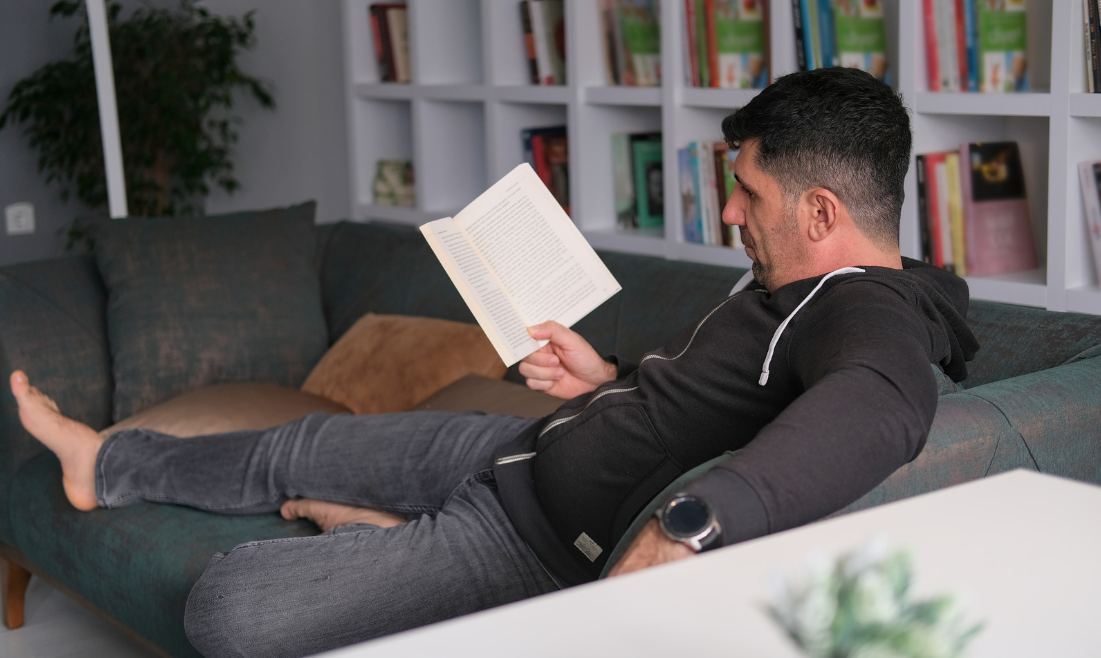
Replace 30 minutes of daily scrolling with 30 minutes of reading—any time of day. Choose a book, magazine, or even a short story.
Try reading during:
- your commute
- lunch break
- before bed
- a Screenless Sunday
Track how you feel. Are you less stressed? More focused? Sleeping better?
Need Inspiration? You could try:
- A new fiction novel
- A wellbeing or personal development book
- Poetry or short stories
- Audiobooks (if you prefer listening)
- Magazine articles or long-form journalism
Make this month a month for reading!
Put your phone down, open a book, and give your mind the break it deserves.